
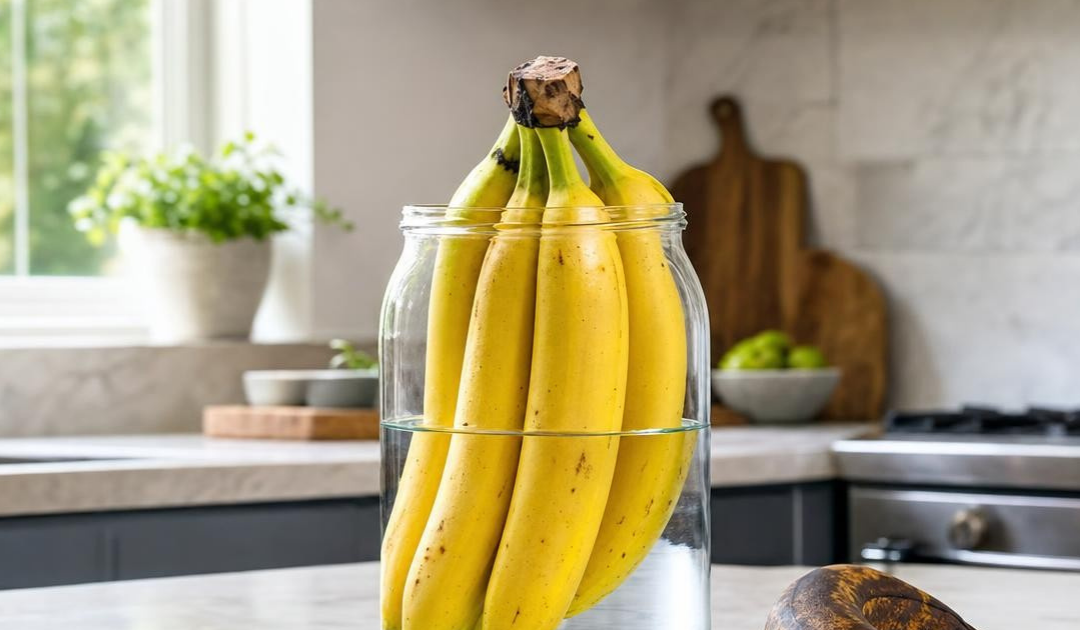
Unlocking the Secrets to Keeping Bananas Fresh: The Glass Jar Method
Have you ever felt the disappointment of buying a bunch of beautiful, ripe yellow bananas, only to watch them turn brown and mushy seemingly overnight? You’re not alone. Bananas are notorious for their rapid ripening process, leading to unnecessary waste in kitchens worldwide. However, food-storage expert Amy Cross has discovered a simple kitchen hack that can revolutionize how we store bananas. The method involves a common household item—a glass jar—and promises to extend the life of your bananas, keeping them fresh and yellow for up to 16 days. In this guide, we will delve into the science behind banana ripening, why traditional storage methods fall short, and how you can effectively utilize the glass jar method to keep your bananas at their best.
Understanding Banana Ripening: Why Do Bananas Turn Brown?
To effectively prevent bananas from turning brown, it’s essential to understand the ripening process. Bananas are classified as climacteric fruits, which means they continue to ripen after being harvested. This ripening is driven primarily by the natural release of a plant hormone called ethylene.
The Stages of Ripening
As bananas ripen, several changes occur:
- Color Change: The bright green peel of an unripe banana transitions to a beautiful yellow.
- Texture: The fruit softens, making it easier to eat.
- Flavor: Starches within the fruit convert to sugars, enhancing its sweetness.
- Aroma: The characteristic banana scent becomes more pronounced as it ripens.
- Spots: Brown spots appear, indicating overripeness.
Once bananas become overripe, they can quickly become spoiled and inedible, a common issue for consumers. Various factors, including temperature, humidity, and exposure to other fruits, can accelerate this process.
The Downside of Fruit Bowls: Why Bananas Don’t Belong There
While a fruit bowl on your kitchen counter offers a cheerful display, it may not be the best environment for bananas. Here’s why:
- Ethylene Gas Accumulation: When bananas are stored alongside other climacteric fruits like apples and pears, they can experience an increased concentration of ethylene, which accelerates the ripening process.
- Heat Sources: Heat from sunlight, ovens, or other appliances can further hasten ripening, leading to premature browning.
Given these factors, it becomes clear that traditional storage methods in fruit bowls are not optimal for prolonging the freshness of bananas.
The Glass Jar Method: A Breakthrough in Banana Storage
Recognizing the shortcomings of typical banana storage methods, Amy Cross conducted an experiment to evaluate the effectiveness of the glass jar method. Her findings are remarkable and suggest that this simple kitchen hack can keep bananas fresh for an extended period.
The Experiment Explained
In her experiment, Cross used three bananas. Two were left at room temperature while one banana was cut in half. She placed one half in a sealed glass jar with a lid and refrigerated it. After conducting the test over 16 days, the results showed a stark difference:
- The banana half stored in the refrigerator maintained its vibrant yellow color and firm texture.
- The bananas left at room temperature developed significant brown spots and a softer texture.
This experiment underscores the effectiveness of using cooler temperatures to slow down the ripening process without compromising taste or texture.
How to Implement the Glass Jar Method
If you’re ready to try this innovative storage method for yourself, follow these simple steps.
Step 1: Choose a Firm Banana
Start with a banana that is firm and predominantly yellow, preferably without any brown spots. An already overripe banana will not benefit from this method.
Step 2: Cut the Banana in Half
Carefully cut the banana crosswise into two halves, ensuring that you leave the peel on. The peel acts as a natural protective barrier.
Step 3: Place the Banana Half in a Glass Jar
Use a clean, dry, wide-mouth glass jar. Place the banana half inside, with the cut side facing downward. Ensure the banana fits comfortably without being crushed.
Step 4: Seal the Jar Tight
Secure the lid tightly. A sealed jar minimizes air exchange, which helps isolate the banana from factors that contribute to ripening.
Step 5: Refrigerate the Jar
Place the jar in the main compartment of your refrigerator. Avoid storing it in the door, as temperatures there may fluctuate, diminishing effectiveness. Let it stay undisturbed for several days, checking periodically for freshness.
Why Refrigeration Works: The Science Behind It
Using a glass jar to store bananas in the refrigerator works for several reasons:
- Temperature Control: Refrigeration slows down enzymatic reactions responsible for ripening, thus extending the life of the bananas.
- Reduced Ethylene Exposure: A sealed jar limits the banana’s exposure to ethylene gas and air, both of which contribute to accelerated ripening.
- Moisture Retention: Sealing the banana helps retain moisture, preventing the fruit from drying out and becoming mushy.
Alternatives and Additional Tips for Keeping Bananas Fresh
While the glass jar method is highly effective, other storage techniques can help prolong the freshness of bananas:
- Separating Bananas: Store bananas separately from other fruits to minimize ethylene exposure.
- Using a Banana Hanger: Hanging bananas can reduce bruising and allow air circulation around the fruit, which can help slow down ripening.
- Wrapping Stems: Wrapping the stems of bananas with plastic wrap can help decrease ethylene production and slow ripening.
Conclusion: A Simple Solution for Hassle-Free Bananas
Reducing food waste and enjoying perfectly ripe bananas can now be as simple as placing a banana half in a glass jar in your refrigerator. The process is straightforward and has been supported by experimentation, suggesting it can keep your bananas fresh and yellow for up to 16 days. By understanding the science of ripening and employing this innovative storage technique, we can all enjoy our bananas at their best—saving money and reducing waste in our kitchens. So, next time you purchase a bunch of bananas, remember this simple hack and indulge in their deliciousness without the frustration of premature browning.